Physical Address
304 North Cardinal St.
Dorchester Center, MA 02124
 Skip to content

You’re probably wondering, “What in the world is the best way to pick a baby activity center for my little sprout?” Well, you’ve come to the right place! Think of a baby activity center as a safe and fun little playground for your baby, a place where they can wiggle, learn, and explore while you maybe get a chance to sip a warm cup of tea. This guide is all about helping you find the perfect one for your precious little bundle, making sure it’s safe, fun, and just right for their growing needs. Trust me, with a little know-how, you’ll feel confident in making the best choice!
Now, what exactly is a baby activity center? Imagine a little station, sometimes it sits on the floor, sometimes it hangs in a doorway, where your baby can be secure but still have lots of interesting things to see and touch. The main idea behind a baby activity center is to give your little one a stimulating environment where they can work on their developing skills. It’s not just about keeping them busy; it’s about helping them grow!
Just like there are different kinds of cookies, there are different kinds of baby activity centers! Let’s look at a few:

These developmental toys aren’t just for fun; they actually help your baby in lots of ways!
You’re probably wondering, “When is the right time to bring out one of these infant activity centers?” Most babies are ready for an activity center around 4 to 6 months old. But remember, every baby is different and grows at their own pace. Don’t rush it, Mama!
How do you know if your little one is ready? Here are a few clues:
Just as there’s a time to start, there’s also a time to say goodbye to the activity center. Usually, babies outgrow them around 12 months old or when they start trying to walk on their own. Once they’re mobile, they’ll have a whole big world to explore! It’s all part of them transitioning to other developmental tools.
Our little ones grow so fast, don’t they? That’s why it’s great to look for a adjustable baby activity center with height-adjustable settings. This means you can change the height as your baby gets taller, so they’re always comfortable and their feet can reach properly (especially important for jumpers!). Some even have adaptable features for growing babies, meaning they can change into different kinds of toys as your child gets older. This can really help you get more bang for your buck!
What makes these centers so engaging? It’s all the fun stuff attached! Look for things like:
This is the most important thing, sweetie. We want to make sure our little ones are safe and sound! Look for these safety features:
As busy mamas, we also need to think about what makes our lives a little easier, right? Consider these practical things:
To give you extra peace of mind, look for activity centers that have safety certifications, like the JPMA certification. This means the product has been tested and meets certain safety standards. It’s like a little stamp of approval saying, “This is a safe choice for your baby.”
Even with a safe activity center, it’s important to use it correctly:
Let’s talk about some things to watch out for:
Just like every baby is unique, there are activity centers designed for different situations and preferences!
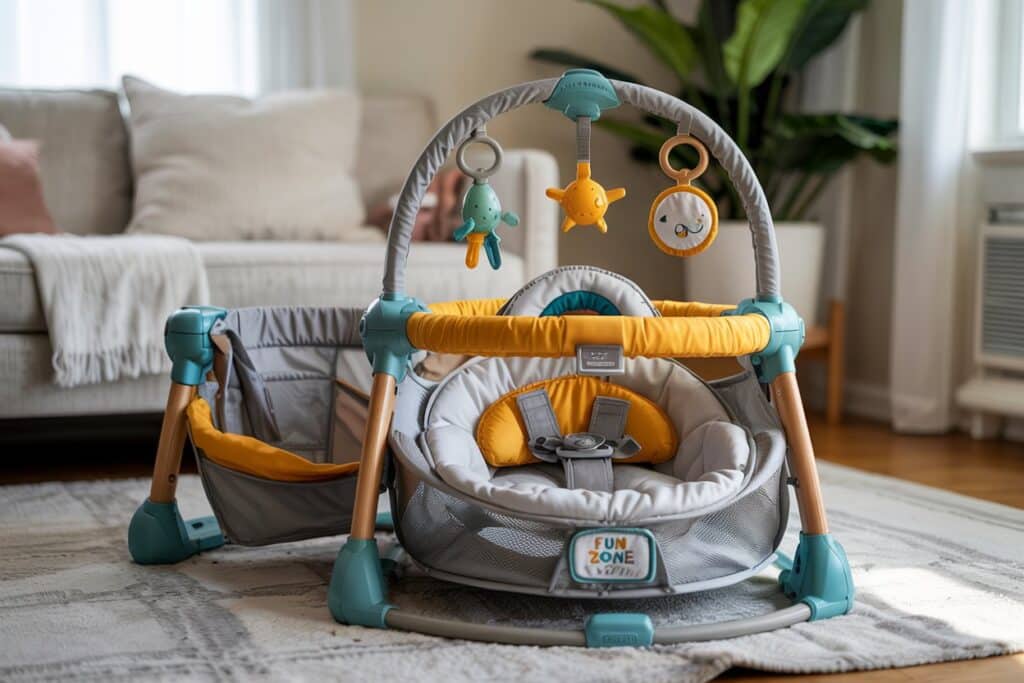
If you’re a mama living in a cozy apartment, you might be looking for compact designs with foldable options. These can be tucked away easily when not in use.
If you’re looking to splurge a little, there are high-end models with advanced interactive elements, like electronic learning games, light-up dashboards, and even the ability to connect your own tablet for educational apps (though always monitor screen time, sweetie!).
You don’t have to spend a fortune to get a good affordable developmental toy! There are plenty of budget-friendly options that are still safe and engaging for your little one. Look for ones with good reviews and the essential safety features.
For our environmentally conscious mamas, there are eco-friendly baby products made from sustainable materials and with environmentally conscious designs. These are often made with organic fabrics and recycled plastics
Remember, sweetie, baby activity centers are just one tool in your parenting toolbox. It’s important to create a balanced routine that also includes plenty of alternating between activity center time and floor play. Floor time is crucial for developing those important crawling and rolling skills!
Don’t just plop your baby in the activity center and walk away. Engaging with your baby during activity center use can make it even more beneficial! Talk to them about the different toys, make the sounds the animals make, and encourage them to reach and grab.
To keep things interesting, try rotating toys to maintain interest and engagement. If your activity center has detachable toys, swap them out with other safe toys your baby enjoys. It’s like getting a brand new toy without buying one!
Let’s talk about keeping things clean for our little ones:
When the activity center isn’t in use, you’ll want to store it neatly. Look for foldable designs for easy storage that can be tucked away in a closet or under the bed.
To make your activity center last for future siblings or for resale, practice proper care to extend the product’s lifespan. Follow the manufacturer’s instructions for cleaning and maintenance.
Here are some common questions mamas like you often ask:
So, there you have it, sweet mama! Choosing the right baby activity center doesn’t have to be overwhelming. Remember to think about your baby’s age and developmental stage, the safety features, the fun interactive elements, and what works best for your space and lifestyle. By keeping these things in mind, you’ll be able to find the perfect little play station to help your baby learn, grow, and have lots of happy wiggles. You’ve got this! And hey, if you’re still curious, you can explore more developmental toys and see what other wonderful things are out there for your little one!
 Optimized by Seraphinite Accelerator